The Library Metaphor That Makes Alzheimer's Progression Easier to Understand
Jul 24, 2026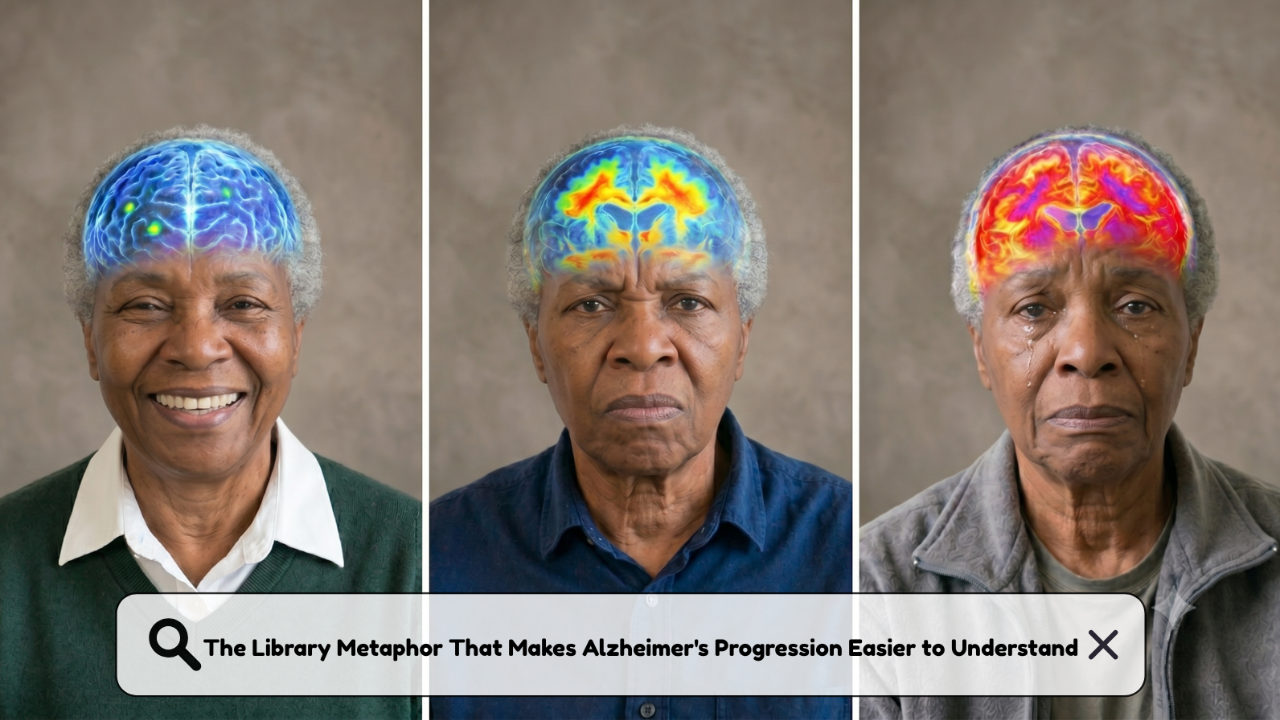
Understanding how Alzheimer's actually progresses doesn't make the disease less painful, but it does make it less frightening. And less fear tends to leave more room for the patience and presence that caregiving asks of us.
1. How to Picture the Brain as a Library
Imagine memories and skills as books in a library. Early on, the books are all still there, but it takes longer to find them. As the disease progresses, more books become harder to locate, and eventually some become inaccessible altogether. This single image makes abstract neurological changes much easier to hold onto.
2. How to Recognize the Mild Stage
In the mild stage, the brain is simply working harder to find information. From the outside, your loved one may appear largely normal, but you may notice new information doesn't stick the way it used to, and recent conversations slip away faster than they once did. Many people are aware of these changes at this stage, which can bring its own anxiety, withdrawal, or low mood worth watching for with compassion.
3. How to Recognize the Moderate Stage
The moderate stage often brings a loss of independence as changes in the frontal lobes begin affecting judgment, emotional regulation, and what's sometimes called cognitive flexibility. This can look like stubbornness from the outside, but it's actually the brain struggling to shift between ideas or adapt to change. This is also the stage where the goal often shifts from trying to convince your loved one there's a problem to quietly finding ways to keep them safe.
4. How to Recognize the Late Stage
In the late stage, the brain struggles simply to interact with the world, and communication along with basic tasks become genuinely difficult. What remains, even here, is the capacity for emotional connection. Touch, music, and familiar voices can still reach someone who may no longer be able to express recognition in words.
5. How to Respond to the Stage in Front of You, Not the Label
Rather than fixating on which stage your loved one is in, it can help far more to ask a simpler question: What is the brain struggling with today? Fatigue, fear, and communication each call for a different response, and that question tends to be more useful than any stage number.
6. How to Remember What Doesn't Change
Beyond memory, Alzheimer's affects judgment, communication, emotional regulation, and self-awareness, which is why care needs to evolve at every stage. But through all of it, the person remains more than their diagnosis. The capacity for joy, for love, for connection, persists for as long as they're with you.
The mild stage is often the most important window for learning dementia-specific communication skills, because the foundation you build early carries you through every stage that follows.
The Confident Caregiver Academy exists to help you build exactly that foundation, with education and tools designed for wherever you and your loved one are right now.
✨ If this post resonated with you, I’d love to stay connected.
Join other caregivers who receive my free weekly newsletter, The Confident Caregiver Weekly, for encouragement, expert insights, and tools to help you find balance while caring for your loved one.
Sign Up for The Confident Caregiver Weekly
🎥 Watch On YouTube
Want to watch the in-depth video that inspired this post?
Click the video below to watch. ↓
Caring is tough—but you don’t have to do it alone.
Get weekly encouragement, practical dementia care tips, and tools to make caregiving feel lighter.
Click below to get practical tools and advice sent straight to you.
We hate SPAM. We will never sell your information, for any reason.