Why Hurtful Words From Someone With Dementia Stick, and How to Let Them Go
Jul 17, 2026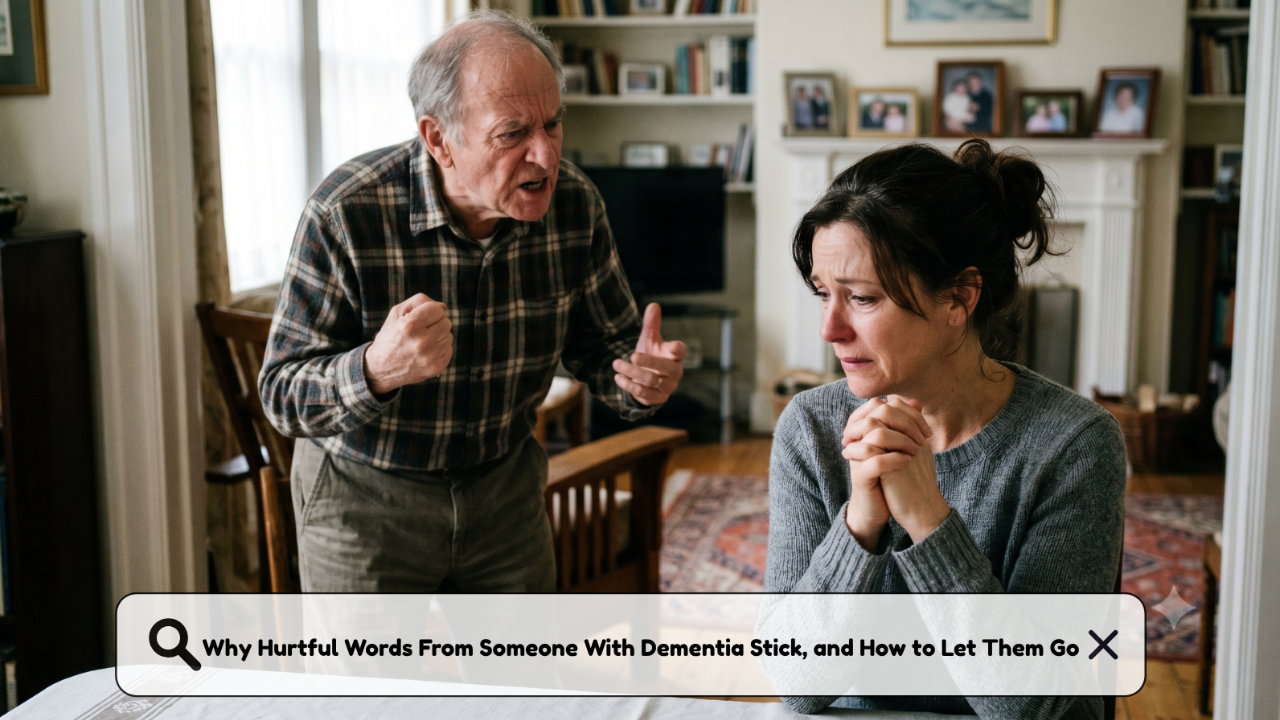
A single sharp comment from someone you love can echo for hours, sometimes days. It isn't because you have thin skin. It's because of how your nervous system is built to process moments that feel like personal attacks, even when they aren't one.
1. How to Understand Why These Moments Stick So Deeply
The brain is wired to interpret sharp words as a personal attack rather than as an impulsive symptom of dementia, which is part of why these moments hurt so much in the first place. They also tend to accumulate, since caregivers often move from one task straight to the next without pausing to reset, so even small moments pile up into something heavier over time. And when a hard moment happens on what was otherwise a good day, the brain flags it as significant and replays it, a kind of built-in survival mechanism preparing you for next time.
2. How to Catch and Name the Moment as It Happens
The first step isn't to push the feeling away. It's to notice the physical sting as it happens and privately name the specific emotion underneath it, whether that's sadness, anxiety, or embarrassment. Naming an emotion helps the brain begin moving past it instead of looping on it.
3. How to Separate the Words From What They Actually Mean
Once you've named the feeling, the next step is shifting the story you tell yourself about it. Instead of "how dare they say that," try "this is what dementia looks like right now." That shift doesn't make the words less real, but it loosens their grip on you.
4. How to Regulate Your Body Before You Respond
Before saying anything back, give your body a moment to reset: a slow breath out, shoulders dropping, your face softening. This isn't about suppressing your reaction. It's about responding from a steadier place instead of a reactive one.
5. How to Choose a Response That Stabilizes Instead of Escalates
Simple, supportive phrases like "How can I help?" tend to de-escalate far more effectively than trying to explain, correct, or defend yourself in the moment.
6. How to Close the Loop After the Moment Has Passed
Once the interaction is over, take ten to twenty seconds to consciously signal to your body that the moment has ended. Naming one thing you handled well, even something small, helps prevent that moment from quietly stacking onto the next one.
You don't need thicker skin to do this work well. You need a way to process what's happening in real time, so the hard moments don't follow you into the next hour, or the next day.
The Confident Caregiver Academy teaches caregivers exactly this kind of in-the-moment regulation, so the weight of difficult interactions doesn't have to build up unaddressed.
✨ If this post resonated with you, I’d love to stay connected.
Join other caregivers who receive my free weekly newsletter, The Confident Caregiver Weekly, for encouragement, expert insights, and tools to help you find balance while caring for your loved one.
Sign Up for The Confident Caregiver Weekly
🎥 Watch On YouTube
Want to watch the in-depth video that inspired this post?
Click the video below to watch. ↓
Caring is tough—but you don’t have to do it alone.
Get weekly encouragement, practical dementia care tips, and tools to make caregiving feel lighter.
Click below to get practical tools and advice sent straight to you.
We hate SPAM. We will never sell your information, for any reason.